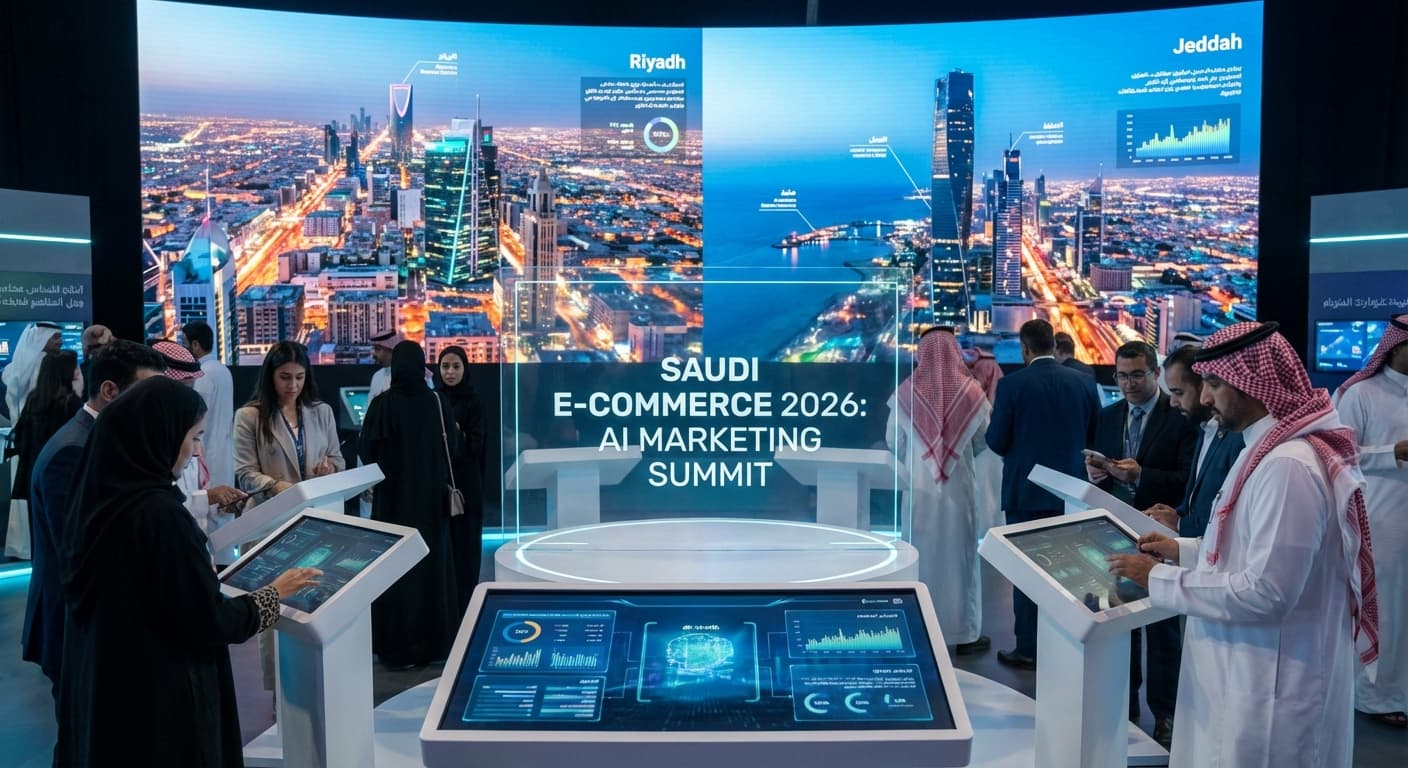
Saudi Arabia's e-commerce market is projected to reach $25 billion by 2026, making it the largest and fastest-growing digital commerce market in the GCC. AI marketing is the primary growth lever for brands targeting Saudi consumers — enabling Arabic-first content at scale, platform-specific campaigns across Snapchat, TikTok, and Instagram, and culturally intelligent personalisation that resonates with the Kingdom's young, digitally connected population.
Saudi Arabia's Digital Marketing Landscape in 2026
Saudi Arabia is not just a large market — it is a market in hypergrowth. According to CITC (2025), internet penetration in Saudi Arabia reached 99%, with smartphone penetration exceeding 96%. This is a population that lives online, and their digital behaviour is reshaping how brands must market.
Key market indicators as of 2026:
- E-commerce market size: According to Bain & Company (2025), Saudi Arabia is the fastest-growing e-commerce market in the GCC, projected to reach $25 billion by 2026.
- Digital ad spend: According to Google (2025), Saudi Arabia is the fastest-growing digital ad market in MENA, with year-over-year growth exceeding 18%.
- Mobile commerce: Over 80% of online purchases in KSA are completed on mobile devices. Any marketing strategy that is not mobile-first is structurally disadvantaged.
- Payment evolution: MADA card penetration and digital wallet adoption (STC Pay, Apple Pay) have dramatically reduced friction in online transactions, expanding the addressable e-commerce audience.
Vision 2030 is accelerating this transformation. The Kingdom's national strategy targets a digital economy contribution of 19.2% of GDP, with direct government investment in digital infrastructure, startup ecosystems, and AI adoption. For marketers, this means a market where digital sophistication is not just welcomed — it is expected.
5 AI Marketing Strategies for KSA E-Commerce
- Arabic-First Content Generation at Scale. Saudi consumers prefer Arabic content — not translated English, but content that feels natively Arabic. AI content engines trained on Gulf Arabic produce product descriptions, ad copy, email sequences, and social content that resonates with Saudi audiences. This is not a luxury; it is the baseline requirement. Brands that market in English only to a Saudi audience are leaving 60-70% of engagement on the table. AI content production makes Arabic-first economically viable at scale.
- Platform-Specific Campaign Architecture. Saudi Arabia's social media landscape is distinct from the rest of the GCC. According to Snap Inc. (2025), Snapchat reaches 90% of 13-34 year-olds in Saudi Arabia. TikTok usage has surged 45% year-over-year. Instagram remains the dominant product discovery platform for women. AI manages campaigns across all three simultaneously, generating platform-native creative (vertical video for TikTok, AR lenses for Snapchat, carousel ads for Instagram) and allocating budget based on real-time performance data.
- Seasonal Campaign Automation. The Saudi marketing calendar is defined by seasonal peaks: Ramadan (the biggest e-commerce period), Eid al-Fitr, Eid al-Adha, National Day (September 23), Founding Day (February 22), and the year-end shopping season. AI paid advertising pre-positions campaigns for each season, automatically adjusting budgets, creative, and targeting as consumer behaviour shifts. During Ramadan 2025, AI-managed campaigns for our clients delivered 40% higher ROAS than manually managed campaigns — because AI adjusted bids hourly during the late-night shopping surge that characterises Ramadan e-commerce.
- Influencer Marketing with AI Selection. Saudi Arabia has one of the world's highest influencer marketing adoption rates. But not all influencers deliver ROI. AI analyses 10,000+ Saudi influencers across engagement authenticity, audience demographics, brand affinity, and historical campaign performance to identify the right partners. AI also generates personalised collaboration briefs, tracks post-to-purchase attribution, and calculates true influencer ROI — not just vanity metrics like reach and likes.
- Localised Landing Pages and Personalisation. Saudi consumers in Riyadh have different preferences than those in Jeddah (more on this below). AI powered websites serve personalised landing page experiences based on the visitor's location, language preference, browsing history, and referral source. A visitor from Riyadh arriving via Snapchat sees different featured products and promotions than a visitor from Jeddah arriving via Google Search. This localised personalisation increases conversion rates by 20-35% compared to one-size-fits-all experiences.
Platform Preferences in Saudi Arabia
| Platform | Saudi Reach | Primary Audience | Best For | AI Marketing Application |
|---|---|---|---|---|
| Snapchat | 90% of under-35s | Gen Z, young millennials | Brand awareness, AR experiences | AI-generated AR lenses, dynamic Story ads |
| TikTok | Fastest-growing (+45% YoY) | 18-35, all genders | Product discovery, viral content | AI short-form video scripts, trend detection |
| High, especially women 25-44 | Women, fashion/beauty buyers | Product showcase, influencer content | AI carousel ads, shopping tag optimisation | |
| X (Twitter) | Highest per-capita globally | Men 25-45, news/opinion | Brand sentiment, trending topics | AI social listening, real-time engagement |
| YouTube | Very high, all demographics | Broad audience | Long-form content, tutorials, reviews | AI video script generation, ad targeting |
| Near-universal | All demographics | Customer service, order updates | AI chatbot for commerce and support |
Cultural Nuances for Marketing in Saudi Arabia
Effective marketing in Saudi Arabia requires cultural intelligence that goes beyond language translation:
- Religious and cultural sensitivity. Marketing content must respect Islamic values. During Ramadan, messaging shifts to generosity, family, and spiritual themes. Product imagery must comply with modesty standards. AI content systems should be configured with cultural guardrails specific to Saudi norms.
- Gender dynamics. Saudi Arabia's consumer market is increasingly driven by women, who account for a growing share of e-commerce transactions. However, marketing imagery and messaging must navigate evolving social norms thoughtfully. AI personalisation allows different creative to be served to different audience segments without managing separate campaigns.
- Family-centric purchasing. Many purchase decisions in Saudi Arabia involve family consultation, particularly for high-value items. Marketing funnels should accommodate longer consideration periods and provide content suitable for sharing within family groups (WhatsApp-friendly formats).
- National pride and Vision 2030 alignment. Saudi consumers increasingly favour brands that demonstrate alignment with Vision 2030 values: innovation, local empowerment, and national development. Marketing that connects brand values to national aspirations resonates strongly.
- Payment preferences. Cash-on-delivery remains significant in some categories, though MADA card and digital wallet adoption is accelerating. Marketing funnels should highlight multiple payment options and build trust through return policy visibility.
Riyadh vs Jeddah: Market Differences
Saudi Arabia is not a monolithic market. The two largest cities have distinct consumer profiles that AI marketing must account for:
| Factor | Riyadh | Jeddah |
|---|---|---|
| Population | ~8 million (largest city) | ~4.7 million |
| Consumer Profile | More conservative, family-oriented, government/corporate employees | More cosmopolitan, trade-oriented, diverse expatriate population |
| E-Commerce Behaviour | Higher average order values, preference for established brands | More experimental, higher fashion/beauty spend per capita |
| Platform Preferences | X (Twitter) very strong, Snapchat dominant for youth | Instagram slightly more dominant, international platform adoption higher |
| Seasonal Peaks | Riyadh Season (Oct-Mar) drives entertainment and luxury spending | Jeddah Season and Hajj period drive hospitality and retail spikes |
| Language Mix | Predominantly Arabic, some English in business contexts | More bilingual, higher English content consumption |
AI marketing platforms can automatically adjust creative, messaging, offers, and even product recommendations based on the visitor's city — ensuring that marketing feels local and relevant regardless of which Saudi market you are targeting.
Frequently Asked Questions
What is the best platform for e-commerce marketing in Saudi Arabia?
There is no single best platform — the optimal mix depends on your product category and target demographic. For youth-focused brands (fashion, electronics, gaming), Snapchat and TikTok deliver the highest engagement. For women's products (beauty, fashion, home), Instagram remains the primary product discovery platform. For B2B and professional services, X (Twitter) has unusually high engagement in Saudi Arabia compared to other markets. The most effective strategy uses AI to manage campaigns across 3-4 platforms simultaneously, allocating budget based on real-time performance data.
How important is Arabic content for marketing in Saudi Arabia?
Critical. While many Saudi consumers understand English, they prefer Arabic content — especially in categories where emotional connection matters (beauty, food, fashion, lifestyle). Research consistently shows that Arabic-language ads in Saudi Arabia outperform English-language ads by 40-60% on engagement metrics. AI content engines make Arabic-first marketing economically viable at the volume required for competitive digital presence.
What marketing regulations should e-commerce brands be aware of in KSA?
Key regulations include the Saudi E-Commerce Law (2019), which mandates transparent pricing, clear return policies, and data protection compliance. The Communications, Space and Technology Commission (CST) oversees digital advertising standards. For food, health, and beauty products, additional SFDA (Saudi Food and Drug Authority) regulations apply to marketing claims. AI content systems configured with Saudi-specific compliance guardrails help ensure all marketing material meets regulatory requirements before publication.
How does Vision 2030 affect digital marketing opportunities in Saudi Arabia?
Vision 2030 is a massive catalyst for digital marketing. The government's investment in digital infrastructure, entertainment (Riyadh Season, NEOM), tourism, and entrepreneurship is creating new consumer segments and spending occasions. The entertainment sector alone — virtually non-existent five years ago — is now a major marketing opportunity. E-commerce brands that align their marketing with Vision 2030 themes (innovation, youth empowerment, national development) see measurably higher brand affinity scores among Saudi consumers.
Ready to grow your brand in Saudi Arabia's booming e-commerce market? Book a strategy session with Hovi Digital Lab. We will analyse your category's competitive landscape in KSA, identify the highest-impact AI marketing strategies for your brand, and build a roadmap for Riyadh, Jeddah, and beyond. Explore our full AI marketing solutions to see how we help brands scale across the GCC.