The best marketing agency alternatives in 2026 are AI-native teams that replace bloated retainers and slow turnaround times with automation-driven execution, real-time optimisation, and transparent performance metrics. Brands that switch from traditional agencies to AI-native partners are reporting 3-5x improvements in speed-to-market and 2-4x better cost efficiency across paid, organic, and content channels.
The Traditional Agency Model Is Cracking
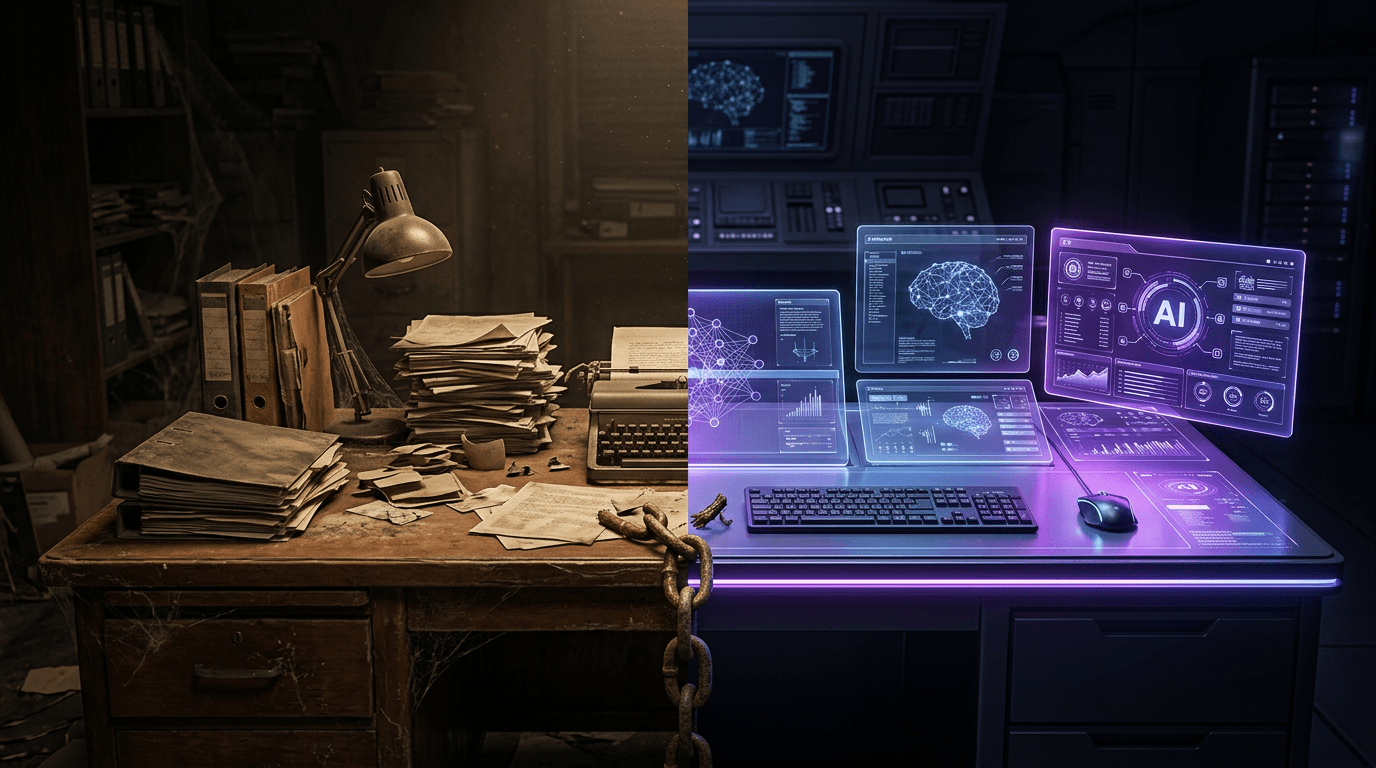
We say this with respect for the industry — we came from it. But the traditional agency model was built for a different era. One where producing a TV spot took months, media buying happened over lunches, and "digital" meant having a website.
Here's the thing. The model relies on billable hours and headcount. More people, more hours, higher retainer. But AI has fundamentally changed the ratio of input to output. Tasks that used to require a 5-person team and two weeks — competitive analysis, creative brief development, initial ad copy, audience segmentation — can now be done by one strategist with the right AI stack in two days.
That's not a marginal improvement. It's a structural shift. And it creates a problem for agencies whose economics depend on selling time.
The Speed Gap
Traditional agencies operate in campaign cycles. Brief > strategy > creative > review > launch. Four to eight weeks is standard. Some agencies still require 2 weeks just for a creative brief.
We launched a full-funnel campaign for a KSA-based app — TikTok, Snapchat, and Google Ads — in 9 days. From strategy session to live ads. The AI tools handled audience modelling, ad copy variations (37 versions across 3 languages), and initial bid strategy. Our strategists focused on what humans are actually good at: brand positioning, cultural nuance, and big-picture creative direction.
Nine days. Not nine weeks.
The Cost Problem
A mid-tier traditional agency in Dubai charges AED 40,000-80,000/month for a retainer that covers a dedicated account manager, a designer, a copywriter, and a strategist. Maybe a media buyer. That's five salaries you're subsidising — regardless of output.
An AI-native team delivers the same (or more) output with fewer people, because the repetitive, pattern-based work is automated. The savings get passed to the client or reinvested into ad spend. Either way, you get more for less.
What AI-Native Teams Do Differently
The difference isn't just "we use AI tools." Every agency claims that now. The difference is architectural — how the entire operation is designed around AI from day one.
- Creative production is AI-augmented, human-directed. Our AI Content Engine generates blog posts, email sequences, social copy, and ad creatives in bulk. Human strategists review, refine, and approve. The ratio flips — instead of humans doing 90% of the work, humans do the 20% that matters most.
- Optimisation is continuous, not periodic. Traditional agencies review campaign performance weekly or biweekly. Our systems adjust bids, budgets, and targeting every day based on real-time data. When we managed AI-Driven Paid Ads for NuYu MediSpa, this continuous optimisation contributed to a 2,415% increase in lead generation.
- Reporting is prescriptive, not descriptive. Traditional reports tell you what happened. Our dashboards tell you what to do next. "Your TikTok CPA dropped 18% this week — reallocate 12% of Meta budget" is more useful than a 40-slide deck showing impressions and clicks.
- Scope is full-funnel, not siloed. Traditional agencies often specialise in one channel. Paid agency here, SEO agency there, content shop over there. AI-native teams integrate everything because the AI models work better with more data. When we handle the full growth stack, each channel informs the others.
The Numbers Don't Lie
Let's compare outcomes. These are real results from brands that moved from traditional agency models to working with Hovi Digital Lab:
Waseel — B2B Health Tech (KSA)
Before Hovi: fragmented digital presence, no structured sales process, minimal online visibility. After 12 months with our AI-native approach: 500% ROI on marketing spend, 400% traffic increase, and #1 Google ranking for 900% more keywords. Their previous agency had them stuck at 2,000 monthly visitors. We took them past 10,000.
Ohana Hills — Real Estate (Lebanon)
Traditional marketing had drained their budget without producing qualified leads. Our AI-driven approach delivered an 800% increase in sales-qualified leads, 26% month-over-month traffic growth for six consecutive months, and 2.4M ad impressions per quarter. The 220% ROI spoke for itself.
Bassam Fattouh — Beauty E-commerce (MENA)
Four months after switching to an AI-native strategy: 70% increase in monthly website orders, 168% more website traffic, and an 810% boost in Instagram referral traffic. The previous approach wasn't broken — it was just slow. AI made it fast.
Marketing Agency Alternatives: What to Actually Look For
If you're evaluating alternatives to your current agency, here's our framework. We've shared this with dozens of CMOs across the GCC and it consistently helps them make better decisions:
| Criteria | Traditional Agency | AI-Native Team |
|---|---|---|
| Campaign launch speed | 4-8 weeks | 1-2 weeks |
| Creative variations per month | 10-20 | 100-300+ |
| Optimisation cadence | Weekly/biweekly | Daily/continuous |
| Reporting depth | Descriptive | Prescriptive |
| Cost efficiency | Headcount-based pricing | Outcome-based pricing |
| Multi-language capability | Per-language surcharge | Built into AI pipeline |
| Full-funnel integration | Usually siloed | Integrated by design |
When a Traditional Agency Still Makes Sense
We're not going to pretend traditional agencies are useless. They're not. There are specific scenarios where the old model still works:
- Brand identity work. Logo design, brand guidelines, visual identity — these require deep human creativity and shouldn't be rushed by AI.
- High-production video and photography. Commercial shoots, brand films, and editorial photography still need human directors and crews.
- PR and media relations. Journalist relationships and media placements are inherently human tasks.
But for performance marketing? Growth? Lead generation? Paid ads? Content at scale? SEO? The AI-native model wins on every metric that matters.
How to Transition Without Burning Everything Down
Switching agencies is painful. We know — we've onboarded brands mid-campaign more times than we can count. Here's how to do it without losing momentum:
- Audit first. Before you terminate your current agency, get a third-party audit of what's working and what isn't. We offer this as a standalone service — a full-stack Chief AI Officer assessment that maps your current martech stack, identifies automation opportunities, and quantifies the gap.
- Parallel run for 30 days. Run the new AI-native team alongside your existing agency for one month. Compare speed, quality, and cost. The data will make the decision obvious.
- Transfer assets, not just logins. Make sure you own all creative assets, analytics data, and audience lists. Too many brands lose their historical data during transitions.
- Set 90-day benchmarks. Give the new team clear KPIs with a 90-day review. If they're AI-native, they should be showing improvements within the first 30 days.
Frequently Asked Questions
Are AI-native agencies replacing human marketers?
No. They're replacing the outdated model, not the people. AI-native teams still employ strategists, creatives, and account managers — just fewer of them, doing higher-value work. The manual, repetitive tasks get automated. The strategic, creative, relationship-driven tasks stay human. The result is a leaner team that produces more.
What marketing agency alternatives exist beyond AI-native firms?
Besides AI-native agencies, brands can consider in-house teams with AI tools, hybrid models (in-house strategy + outsourced execution), fractional CMO arrangements, and performance-based agencies that only charge on results. Each has trade-offs. AI-native agencies tend to offer the best balance of expertise, speed, and cost for brands that want to grow without building a large internal team.
How do I know if my current agency is actually using AI?
Ask three questions: What AI tools are integrated into your workflow? What percentage of creative output is AI-generated vs. human-created? Can you show me a before/after comparison of campaign performance since implementing AI? If they can't answer with specifics, they're probably just using ChatGPT for copywriting and calling it "AI-powered."
Won't AI make marketing feel generic and impersonal?
Only if it's used poorly. The whole point of AI in marketing is hyper-personalisation — serving the right message to the right person at the right time. When done well, AI marketing feels more personal than traditional approaches because it adapts in real time to individual behaviour, not broad demographic segments.
What's the typical ROI improvement when switching to an AI-native agency?
Based on our client data across the GCC, brands typically see 200-500% ROI improvements within the first 6 months. Waseel achieved 500% ROI. Ohana Hills hit 220% ROI. The improvements come from better targeting (less wasted spend), faster optimisation (catching what's not working sooner), and higher content output (more tests, more winners).
Ready to see how your current marketing stacks up against what's possible? Get in touch with our team for a no-commitment audit of your growth channels. We'll show you exactly where AI can — and can't — make a difference.